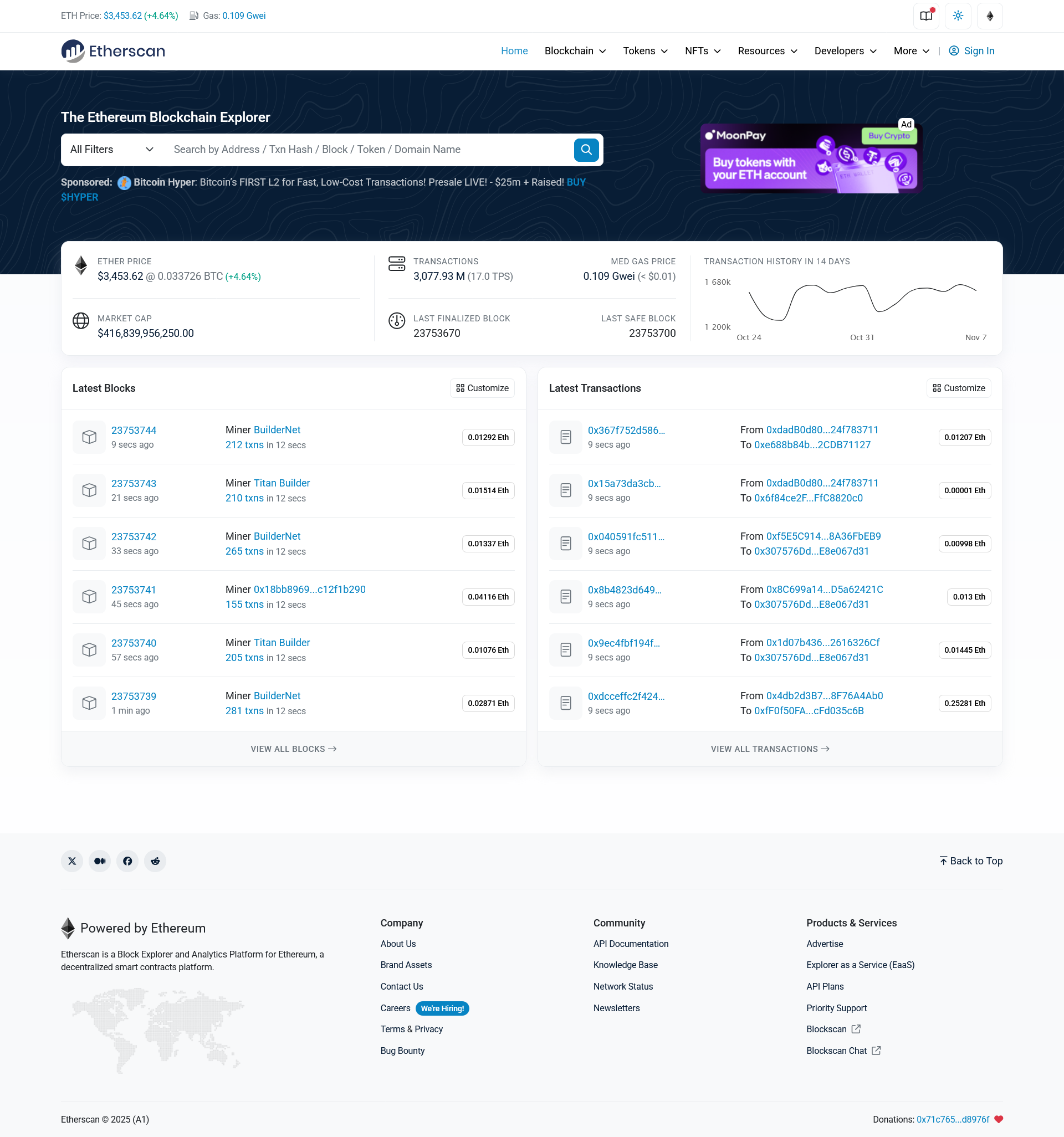
Etherscan: The Essential Blockchain Explorer for Ethereum :-
Introduction ;
As blockchain technology continues to reshape finance, digital ownership, and decentralized applications, transparency has become one of its defining features. Unlike traditional financial systems that often operate behind closed doors, blockchain networks allow anyone to verify transactions and inspect network activity in real time. On the Ethereum blockchain, one of the most important tools enabling this transparency is Etherscan.
Etherscan is a blockchain explorer and analytics platform designed specifically for the Ethereum ecosystem. It enables users to search, verify, and analyze transactions, wallet addresses, smart contracts, tokens, and network activity. Whether someone is a beginner learning about crypto or an experienced blockchain developer, Etherscan provides critical insights into how Ethereum operates.
What Is Etherscan?
Etherscan Official Website :
Etherscan is a web-based blockchain explorer launched in 2015 to provide transparent access to Ethereum network data. It acts as a search engine for blockchain information, allowing users to inspect everything recorded on Ethereum’s public ledger.
Unlike cryptocurrency wallets such as MetaMask or exchanges like Coinbase, Etherscan does not store assets or execute trades. Instead, it functions as an informational interface that translates complex blockchain data into readable and searchable content.
Key Features of Etherscan :
1. Transaction Tracking :-
One of Etherscan’s most widely used functions is transaction tracking. Every Ethereum transaction receives a unique transaction hash (TxHash). By entering this hash into Etherscan’s search bar, users can view:
. Sender and recipient addresses , Amount transferred , Gas fees , Transaction status , Timestamp , Block confirmation details
This feature is especially useful for verifying crypto payments and troubleshooting delayed transactions.
2. Wallet Address Analysis :-
Etherscan allows users to inspect Ethereum wallet addresses in detail. A wallet page typically includes:
. ETH balance , Token holdings , Transaction history , NFT collections , Internal transactions
This level of transparency helps users monitor their own wallets and analyze activity across the network.
3. Smart Contract Verification :-
Ethereum’s power comes largely from smart contracts — self-executing programs deployed on the blockchain. Etherscan enables developers to verify smart contract source code publicly.
Verified contracts improve transparency and trust because users can inspect the underlying code before interacting with decentralized applications (dApps).
4. Token Tracking :-
Etherscan supports both ERC-20 tokens and NFTs. Users can view:
. Token supply , Holder distribution , Transfer history , Contract creators , Market activity
This feature has become essential for researching new crypto projects and identifying suspicious token behavior.
5. Gas Tracker :-
Ethereum transaction fees fluctuate depending on network congestion. Etherscan’s Gas Tracker helps users estimate optimal transaction fees in real time.
The tracker displays:
. Low, average, and high gas prices , Estimated confirmation times , Historical gas trends
This helps users avoid overpaying during busy network periods.
Why Etherscan Matters ;
. Transparency and Trust ;
Blockchain systems rely heavily on transparency. Etherscan gives users the ability to independently verify transactions and smart contract activity without relying on intermediaries.This openness reduces fraud risks and increases accountability across decentralized ecosystems.
. Educational Value ;
For newcomers, Etherscan serves as a learning tool for understanding blockchain mechanics. By exploring real transactions and smart contracts, users gain practical insights into how Ethereum works.
. Security Benefits ;
Etherscan helps users identify suspicious activity, fake tokens, phishing scams, and malicious smart contracts. Many crypto users rely on Etherscan to validate project legitimacy before investing.
Developer Utility ;
Developers use Etherscan APIs and analytics tools for:
. Debugging smart contracts , Monitoring network activity , Integrating blockchain data into applications
. Auditing decentralized finance (DeFi) protocols
Etherscan and the Ethereum Ecosystem ;
Etherscan has become deeply integrated into the broader Ethereum ecosystem. Many decentralized applications link directly to Etherscan for transaction verification and contract inspection.
Limitations of Etherscan,
Despite its usefulness, Etherscan has certain limitations:
Not a Wallet ,
Etherscan cannot send, receive, or store cryptocurrency. Users still need a wallet application for asset management.
Public Visibility ,
Because Ethereum is a public blockchain, wallet balances and transaction histories are visible to everyone. While addresses are pseudonymous, privacy remains limited.
Complexity for Beginners ,
Although Etherscan simplifies blockchain data significantly, the platform may still appear technical and overwhelming for new users unfamiliar with crypto terminology.
Conclusion :-
Etherscan plays a foundational role in the Ethereum ecosystem by making blockchain data transparent and accessible. From transaction verification to smart contract analysis, the platform empowers users, developers, and researchers with real-time insight into one of the world’s largest blockchain networks.
As Ethereum continues to grow through decentralized finance, NFTs, and Web3 innovation, Etherscan remains an indispensable tool for navigating and understanding blockchain activity.